The Bermuda Triangle Mystery
Overview
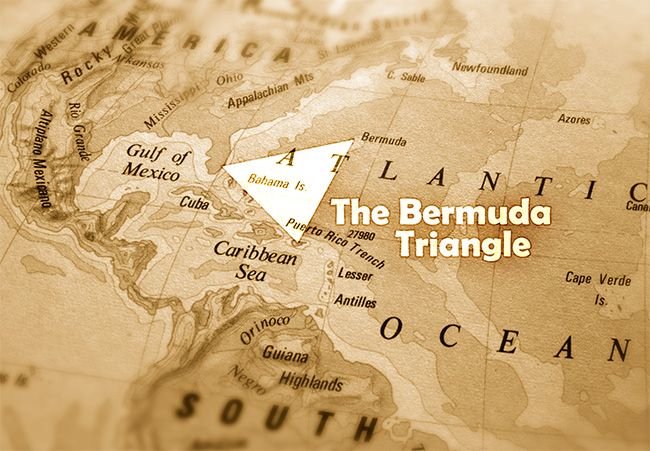
The Bermuda Triangle, also known as the Devil's Triangle, is a loosely defined region in the western part of the North Atlantic Ocean where a number of aircraft and ships are said to have disappeared under mysterious circumstances. The area, roughly bounded by Miami, Bermuda, and Puerto Rico, has become one of the most enduring urban legends of the 20th century.
Investigation
The mystery gained global attention following the disappearance of Flight 19 in 1945, a group of five Navy bombers that vanished during a routine training mission. No wreckage was ever found, and a rescue plane sent to find them also disappeared. Other notable cases include the USS Cyclops, which vanished in 1918 with over 300 people on board. Scientific investigations have proposed various natural explanations, including methane clathrate eruptions from the seafloor that reduce water density, massive 'rogue waves' reaching up to 100 feet, and magnetic anomalies that interfere with compasses. However, skeptics and the U.S. Coast Guard maintain that the number of disappearances is not statistically higher than in any other heavily traveled region of the ocean.
Why it matters
The Bermuda Triangle serves as a powerful symbol of the unknown and the limits of human navigation. It has inspired countless books, films, and documentaries, reflecting a deep-seated human fascination with the possibility of hidden portals, extraterrestrial involvement, or undiscovered natural forces. Despite the lack of definitive evidence for any single 'mystery' cause, the legend continues to captivate the public imagination and remains a staple of modern folklore.
Open this case in the interactive archive